
Selecting the right AHU air intake louver is a critical engineering decision that directly impacts...
What is a louver? An engineer's guide to types, materials, and applications
Louvers are a widely used component across industrial facilities, marine applications, and commercial buildings. From an engineering standpoint, a louver is not just a slatted screen—it is a precisely engineered component designed to manage air and water while meeting the technical demands of the application.
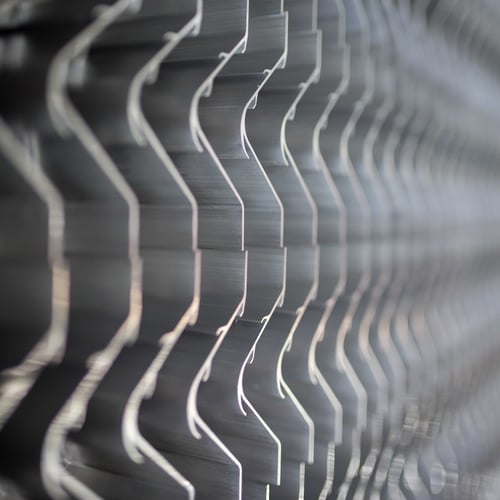
Structurally, a louver system is a frame holding a series of angled blades. The specific angle, shape, and spacing of these blades dictate its function. For over three decades at Alupro, we have engineered these systems for industrial power plants, marine vessels, and offshore platforms. Our focus is technical performance: the right louver for the application's specific demands.
This guide covers the essentials, from first principles to material selection and common pitfalls to avoid in specification.
The Fundamental Purpose: Why Do We Use Louvers?
Louvers fulfill a dual role as functional components and protective barriers. The reason for specifying a louver almost always falls into one of three categories: control, protection, or screening.
Airflow: Providing ventilation for HVAC systems, equipment rooms, and industrial facilities.
Water Ingress: Preventing rain, snow, and sea spray from entering air intakes.
Protection: Shielding expensive mechanical equipment from the elements and physical damage.
However, the outlook may also play a role.
The Two Main Families: Architectural vs. Technical Louvers
The first critical distinction an engineer must make is between architectural and technical louvers. The choice hinges entirely on the louver's primary function.
Architectural Louvers
When the primary driver is aesthetics, visual screening, or sun shading, you specify an architectural louver. These are used for parking garages, office building facades, and exterior cladding. While they offer some weather protection, the focus is not on tested performance. They are not rated for specific levels of water penetration or airflow resistance.
Technical Louvers: The Lungs of the Building
When performance is non-negotiable, you need a technical louver. These are engineered and tested to meet quantifiable standards for airflow and weather protection. They are the go-to solution for protecting sensitive and critical equipment.
The key performance indicators (KPIs) for technical louvers are:
Airflow Performance (K-factor / Pressure Drop): This measures the resistance the louver creates to airflow. A lower pressure drop means the ventilation system works less, saving energy.
Water Penetration Class: This standardized rating (e.g., the Class A to D scale under EN 13030) quantifies how effectively a louver prevents wind-driven rain from passing through.
Technical louvers are essential for HVAC intakes, generator rooms, data centers, and industrial facilities. Our range of technical louvers and droplet separators is designed for these demanding environments.
What is a Louver Made Of? A Guide to Materials
Aluminum: The Versatile Workhorse
Extruded aluminum is the industry standard. It is lightweight, offers excellent corrosion resistance, and is 100% recyclable. Aluminum can be extruded into complex, aerodynamic blade profiles that are impossible to form from bent sheet metal, allowing us to optimize performance without compromising structural integrity.
Stainless Steel: For Strength and Specific Demands
Stainless steel is used when exceptional strength, impact resistance, or extreme corrosive environments require it. For our WS and WST droplet separators, stainless steel is available for the most demanding conditions where aluminum alone may not suffice.
Surface Treatments
Surface treatment protects the louver and defines its final color and texture.
Powder Coating: A dry powder is applied and cured with heat It offers a wide range of colors from the RAL chart
Anodizing: This electrochemical process thickens the natural oxide layer on aluminum, creating a durable, corrosion-resistant finish. Anodizing is available on a case-by-case basis.
- Stainless steel structures are pickled to improve corrosion resistance and provide a clean, uniform surface.
From Requirements to Reality: The Louver Design and Manufacturing Process
Transforming technical requirements into an installed louver system is a multi-stage process.
Defining the Requirements: It starts with the application. Is the goal ventilation, protection from elements, or a combination? Our team works with HVAC engineers and project managers to clarify technical requirements.
Design and Modeling: We use 3D design tools to create detailed models of our louver systems. Since all products are made to measure, this digital precision is non-negotiable.
Manufacturing and Finishing: Aluminum profiles are cut to exact lengths, assembled into modules, and sent for surface treatment. Quality control checks are following every production step.
Delivery: The finished louver systems are carefully packaged and shipped to the site, ready for installation.
Common Mistakes to Avoid When Specifying Louvers
Mistake 1: Confusing Architectural and Technical Louvers. Installing an architectural louver on a critical air intake can lead to water damage and equipment failure. Function must dictate type.
Mistake 2: Equating 'Free Area' with Performance. Free area is the geometric open space between louver blades. A higher percentage might seem better, but it's a misleading metric in isolation. A well-engineered technical louver with a lower free area will almost always outperform a poor design with high free area.
Mistake 3: Ignoring the Surrounding Structure. A louver is part of a larger system. How it fastens to the wall, how waterproofing is handled at sills and jambs, and how it integrates with existing mechanical systems are all critical details that must be addressed at design stage.
Marine and Offshore Louvers
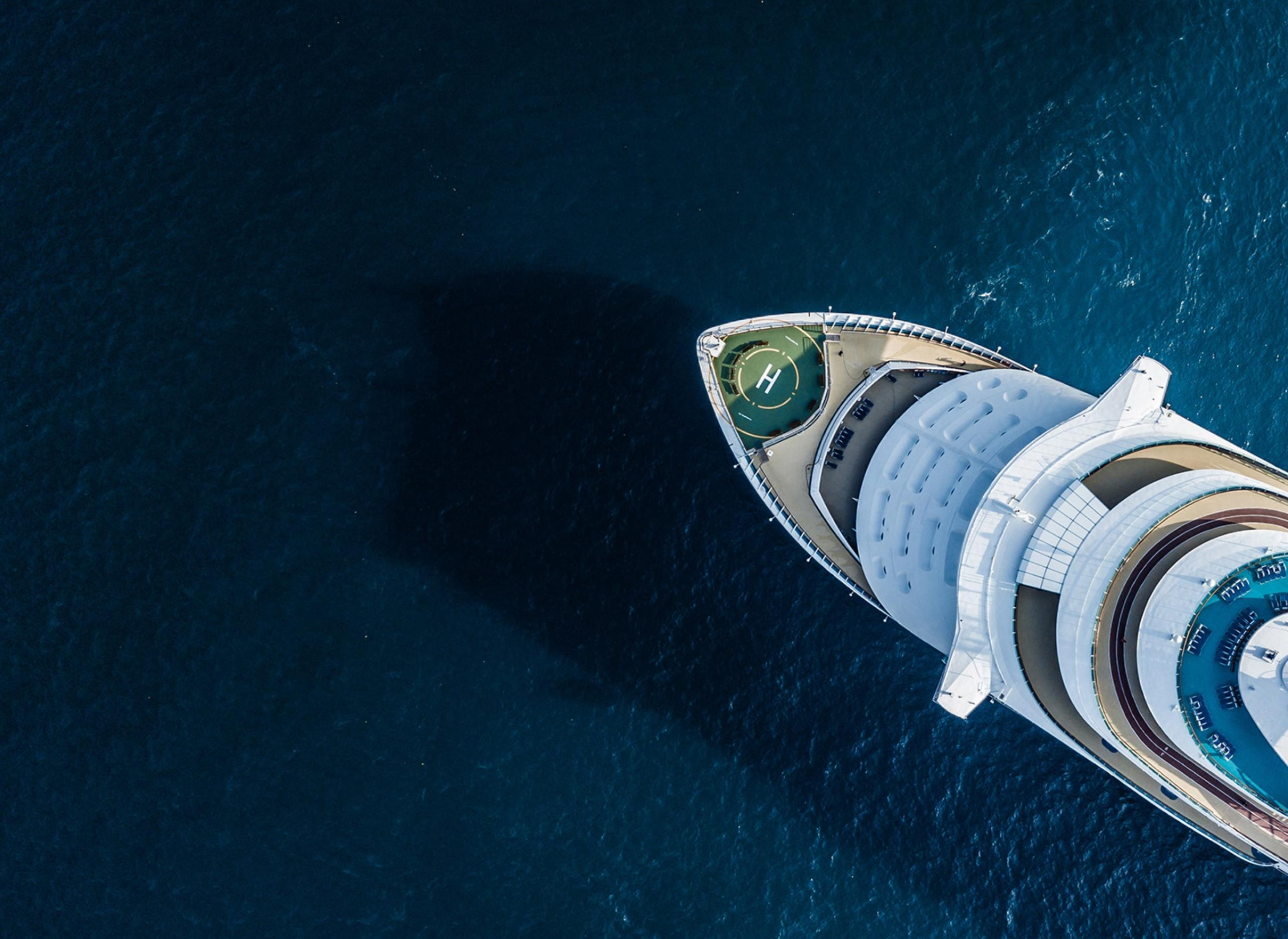
Environments don't get much harsher than the open sea. Louvers on ships and offshore platforms face constant exposure to saltwater spray and extreme winds. Our louvers are engineered specifically for this. They combine aerodynamically efficient profiles for low pressure drop with designs engineered to capture and drain water with high efficiency. Low noise generation and robust construction make them optimal for these demanding industrial and marine applications.
The Right Solution is an Engineered Solution
A louver is not a commodity. It's an engineered component that plays a vital role in a facility's performance, safety, and reliability. The optimal choice is the one that delivers the required performance reliably for decades.
Choosing the right louver solution requires expertise. At Alupro, we combine engineering experience with advanced design tools. Whether you are in the early concept stage or have detailed technical specifications, our team is ready to help. Contact us to discuss your specific needs.
Frequently Asked Questions
What is the difference between a louver and a grille?
A louver has angled blades engineered to control airflow and provide weather protection. A grille is a simpler screen, typically a straight grid, used for basic ventilation or to cover an opening. It does not offer the same level of airflow control or weather resistance as a louver.
How do I determine the right louver size for my project?
The correct size is dictated by performance requirements, not just the opening size. You need the required airflow volume (in m³/h or CFM) and the maximum acceptable pressure drop for your HVAC system. Our engineers use this data to calculate the effective area needed, which determines the louver's final dimensions.
Can aluminum louvers be used in coastal and marine environments?
Yes. With the correct surface treatment, extruded aluminum provides good performance in coastal and marine environments. For the most demanding marine applications—ships and offshore platforms—we recommend our marine-grade aluminum options with powder coating. Our experience from numerous demanding coastal installations shows they hold up well.
What does 'free area' mean for a louver?
Free area is the total open space between the louver blades, expressed as a percentage of the total face area. While a useful starting point, it should not be the sole factor in your decision. A louver's aerodynamic blade design is more critical for determining actual airflow performance and pressure drop.
Are your louvers available in custom colors?
Yes. Our powder-coated aluminum louvers can be finished in colors from the standard RAL color chart, allowing coordination with surrounding structures.

Blog comments