
Optimizing industrial HVAC for energy efficiency: Alupro's approach to custom aluminum components
Industrial HVAC systems are massive energy consumers, often accounting for the largest share of a facility's utility costs. While efficiency efforts typically target major equipment like chillers and boilers, the most significant gains are often made at the system's starting point: the air intake. A truly energy efficient HVAC system begins at the building envelope, with the components that control the quality and flow of outside air.
Subpar intake components trigger a cascade of efficiency losses, higher running costs, and premature equipment failure. We see this across industries, from power plants to data centers. The fix isn't another off-the-shelf part; it's component-level engineering tailored to the specific demands of the facility.
The Hidden Costs of an Inefficient Air Intake
The external louvre and, often, a moisture separator are the gateway for every cubic meter of air entering an HVAC system. Their performance directly dictates the efficiency of all downstream equipment. A failure at the facade radiates through the entire system.
The Problem of Pressure Drop
Pressure drop is the aerodynamic resistance a component introduces to the airflow. A standard, non-optimized louvre forces system fans to work harder and consume more power just to pull in the required air volume. This constant, unnecessary load on the fans translates directly into wasted electricity and higher operational costs over the system's lifespan.
A common mistake is selecting louvres based on initial cost alone, ignoring their aerodynamic properties. This decision can lock in high energy consumption for decades.
The Threat of Moisture and Debris Ingress
Outdoor air is laden with contaminants—moisture, dust, salt, and pollutants. A low-performance intake allows these to penetrate deep into the HVAC system, leading to severe consequences:
Corrosion: Moisture, especially salt-laden air in coastal areas, attacks metal components. It corrodes heat exchanger coils, fan blades, and ductwork, reducing their efficiency and service life.
Reduced Heat Transfer: When coils become fouled with grime or develop mold, their heat transfer capability is compromised. The system must run longer to meet temperature setpoints, wasting energy.
Increased Maintenance: Contaminated systems require more frequent and intensive cleaning. Replacing corroded parts and dealing with blocked filters leads to costly downtime and high maintenance expenses.
Protecting the expensive core of your HVAC system starts by stopping these contaminants at the point of entry.
The Alupro Philosophy: Engineering from the Outside In
Our philosophy is to engineer the HVAC system from the outside in. We see designing for an energy efficient HVAC system as a holistic process that begins at the building’s facade. Rather than compensating for poor intake air quality downstream, we engineer custom-made components that supply clean, low-resistance air from the start.
Our work is about engineering solutions. We specialize in creating high-performance well performing, custom aluminum components that form the first—and most critical—line of defense for industrial HVAC systems.
Technical Louvres: More Than Just a Grille
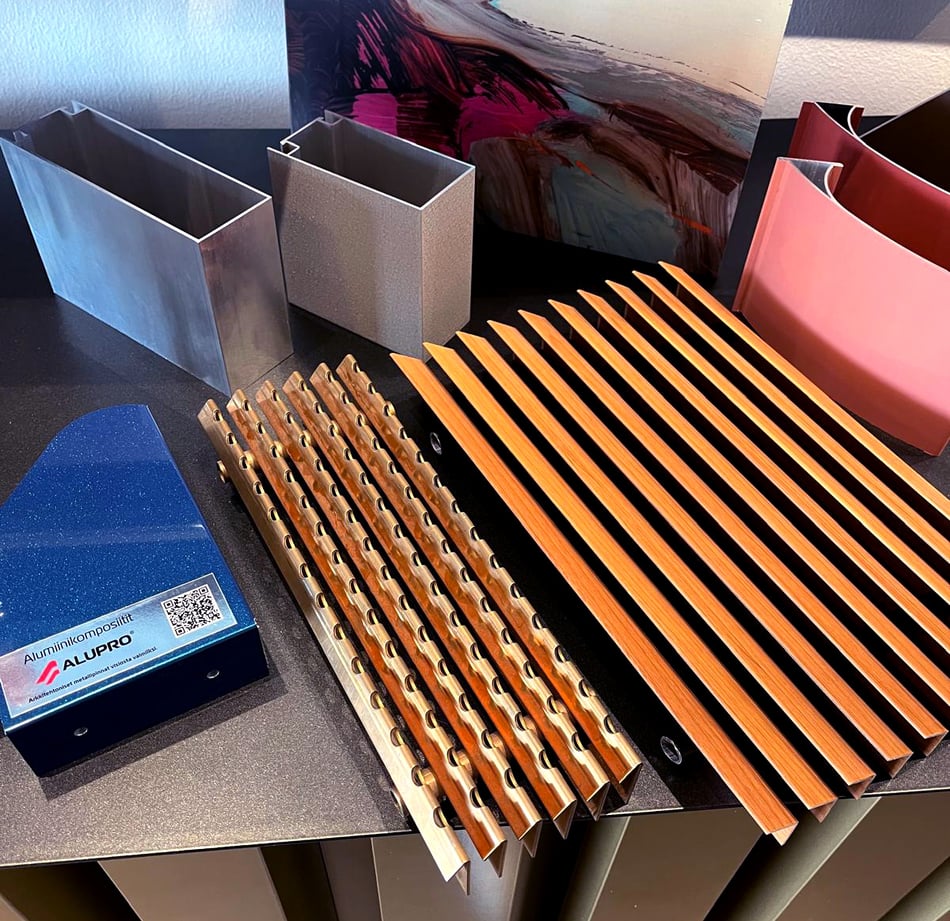
While many louvres appear similar, their engineering details create vast differences in performance. We design our technical louvres with aerodynamics as the guiding principle. The specific shape and spacing of the blades are modeled to guide air into the system with minimal turbulence and resistance. Reducing pressure drop directly translates to lower fan energy consumption and significant operational savings.
Durability is also critical. We manufacture these louvres from high-grade aluminum or stainless steel These technical solutions are a core part of our offering for demanding environments, which you can explore further on our .
High-Performance Droplet Separators: The Ultimate First Defense
When intake air contains rain or sea spray, a louvre alone is insufficient. For these applications, a droplet separator is essential. We have developed a range of high-performance droplet separators—including our WS, WSX, and WST series—specifically for the most demanding industrial, marine, and offshore environments.
These are not passive screens but actively engineered profiles. They use aerodynamic principles to force airborne water droplets to coalesce on the blade surfaces and drain away before entering the HVAC system. The performance is quantifiable and significant. Our Alupro Marine solutions, for instance, can filter up to 99.9% of airborne water particles from the intake airstream. This level of separation keeps internal components dry, prevents corrosion, and improves the longevity and reliability of the entire system.
A Practical Guide to Component Specification
Specifying the correct intake components is a methodical, engineering-led process. We recommend following these key steps.
Analyze the Environment: The first step is a thorough assessment of the operating conditions. A data center in a dry, inland location has vastly different needs than a gas turbine on an offshore platform. This analysis determines the required level of weather protection and material durability.
Define Performance Metrics: Establish clear performance targets. Work with your HVAC designer to define the required airflow (m³/h) and, most importantly, the maximum acceptable pressure drop (Pa) at the intake. This pressure drop budget is a key driver for energy efficiency.
Integrate with 3D Modeling : To ensure a perfect fit in complex modern projects, we use BIM 3D. . This process, part of our , enables clash detection and guarantees a seamless installation, eliminating costly on-site modifications.
Case in Point: From Power Plants to Public Arenas
Our showcases this approach in action.
For a coastal power generation facility, the primary challenge is protecting sensitive key components equipment from salt-laden air. A standard louvre would invite rapid corrosion. The engineered solution is a multi-stage intake system: an outer layer of our technical louvres for weather protection, followed by a WSX High-Performance Droplet Separator to remove the fine water droplets. The result is a system that runs more reliably with far less maintenance, and its core components are protected for a longer service life.
Why Early Collaboration is Key to Success
Intake louvres are often treated as an afterthought, sourced late in the project to fill a structural opening. This approach misses a critical optimization opportunity. Maximum value is achieved when we are involved in the early design stages.
Collaborating with HVAC engineers from the beginning is the core of a successful delivery . If a standard profile doesn't meet the project's unique requirements, our process accommodates the design of entirely new, made-to-measure solutions. This ensures we meet both the architect's aesthetic vision and the engineer's performance specifications. Early collaboration transforms us from a supplier into a solution partner.
Conclusion: A Smarter Approach to HVAC Efficiency
In industrial environments, achieving a truly energy efficient HVAC system requires more than just efficient machinery. It demands an engineering-led approach that starts at the case envelope. By focusing on custom-designed, high-performance louvres and droplet separators, you can significantly reduce pressure drop, prevent contaminant ingress, and protect your critical HVAC assets.
This methodology lowers energy consumption, cuts maintenance costs, and extends system life, delivering a total cost of ownership that off-the-shelf products cannot match.
Is your project demanding more than a standard solution? Contact us to discuss to see what we have to offer.
Frequently Asked Questions
What is the main cause of energy loss at the HVAC air intake?
The primary cause is high pressure drop from poorly designed or undersized louvres. This resistance forces system fans to work harder and consume excess energy continuously. Inefficient debris containing water separation also leads to clogged filters, further restricting airflow and increasing the energy penalty.
How much energy can a low-pressure-drop louvre really save?
The savings are substantial and accumulate over the system's lifetime. Reducing the static pressure that fans must overcome directly lowers their power consumption. For large industrial systems running 24/7, this translates into significant operational cost reductions.
Aren't custom components much more expensive than standard ones?
While the initial investment for a custom-engineered component may be higher, the Total Cost of Ownership (TCO) is typically lower. With custom made components you maintain the freedom to optimize other structures.
At what stage of a project should we contact Alupro?
As early as possible. Engaging with our team during the conceptual or early design phase allows us to provide the most value. We can collaborate with architects and engineers to design the optimal integrated solution, which ensures the best performance and avoids costly changes later on.
What information do you need to design a custom louvre or droplet separator?
To begin, we need the required airflow volume (m³/h or CFM), , the physical dimensions of the opening, and details about the operating environment (e.g., coastal, industrial).
Blog comments